Evaluating Holographic Drips and Splashes PNG for Modern Design Projects
In the evolving landscape of digital design, texture overlays have become essential tools for adding depth, movement, and visual interest to static compositions. Among the various styles available, Holographic Drips and Splashes PNG files have emerged as a distinct category that bridges the gap between traditional fluid art and modern, iridescent aesthetics. For designers, sublimation artists, and creative professionals aged 20 to 50, understanding the specific utility, technical specifications, and comparative advantages of these assets is crucial for making informed resource decisions.
This article explores the characteristics of holographic drip elements, compares them with alternative styles like standard watercolor or neon ink, and outlines the scenarios where they provide the most value. By examining the technical requirements and creative applications, you can determine if this specific style aligns with your project goals.
Defining the Aesthetic: What Makes Holographic Drips Distinct?
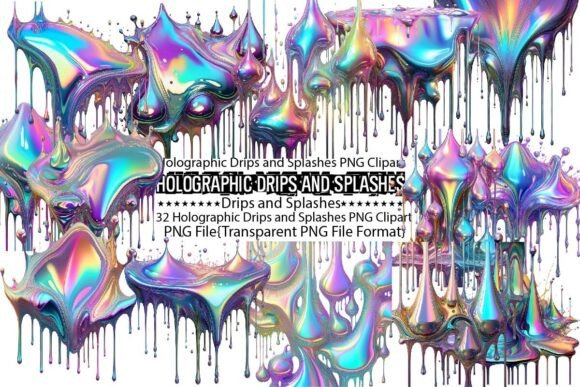
The term "Holographic" in digital clipart refers to a visual effect that mimics the way light refracts through iridescent materials, creating shifting rainbows of color within a single element. Unlike flat vector shapes or solid color fills, Holographic Drips and Splashes PNG files are designed to simulate the chaotic beauty of liquid paint, alcohol ink, or metallic foil reacting to light.
These assets are typically created using high-resolution graphics tablets and processed in software like Photoshop and Illustrator to ensure that the gradients and transparency masks are precise. The result is a collection of 300 dpi PNG files on transparent backgrounds that retain their clarity when scaled. This high resolution is particularly important for physical production methods such as sublimation, where pixelation can ruin the final product.
What sets these files apart from generic splatter effects is the complexity of the color blending. A standard paint splatter might use a single hue or a simple gradient. In contrast, a holographic drip incorporates multiple spectral colors—blues, purples, pinks, and greens—that interact to create a shimmering, three-dimensional illusion. This makes them uniquely suited for projects requiring a futuristic, ethereal, or high-energy vibe.
Comparing Formats: Holographic vs. Traditional Watercolor and Ink
When selecting resources for a design project, it is helpful to compare Holographic Drips and Splashes PNG against other popular textures. Each style serves a different emotional and visual purpose.
- Traditional Watercolor: Standard watercolor clipart often features soft edges, paper grain textures, and muted, organic tones. It evokes a sense of calm, nostalgia, or hand-crafted authenticity. If your brand identity relies on warmth and approachability, traditional watercolor may be a better fit than the high-contrast energy of holographic drips.
- Alcohol Ink and Neon Splatters: These styles share similarities with holographic effects but differ in execution. Alcohol ink designs focus on the bleeding and marbling of pigments, while neon splatters emphasize high-saturation, glowing colors against dark backgrounds. Holographic drips sit between these two, offering the vibrancy of neon but with the complex, multi-tonal refraction of light that gives a more premium, metallic feel.
- Vector Splashes: While vectors are infinitely scalable, they often lack the nuanced shading found in raster-based PNG files. Holographic effects rely heavily on subtle opacity changes and gradient mapping, which are best preserved in high-quality PNG formats rather than simplified vector paths.
The tradeoff here is versatility versus specificity. Traditional watercolors are universally applicable across many industries, whereas holographic drips are highly specialized. They excel in fashion, streetwear, and youth-oriented branding but may feel out of place in conservative corporate communications or minimalist interior design.
Technical Considerations for Sublimation and Print
For those working in physical manufacturing, particularly sublimation printing, the technical quality of the file is paramount. Sublimation involves transferring dye onto polyester fabrics or coated surfaces using heat, a process that demands crisp, high-resolution imagery.
A robust bundle of Holographic Drips and Splashes Sublimation Bundle files should offer 300 dpi resolution to prevent blurring during the transfer process. Additionally, the transparent background is non-negotiable; it allows the designer to overlay the drip effect onto any patterned fabric or colored substrate without introducing unwanted white boxes around the edges.
When comparing these assets to lower-resolution downloads (often found at 72 dpi), the difference becomes apparent upon scaling. Low-res images may appear jagged or muddy when printed on large items like tote bags, t-shirts, or mugs. High-quality PNGs ensure that the intricate details of the rainbow refraction remain sharp, preserving the integrity of the holographic illusion even after the sublimation process.
Best Use Cases and Creative Applications
Understanding where these assets shine helps maximize their impact. Holographic Drips and Splashes PNG files are particularly effective in the following scenarios:
- Fashion and Streetwear Design: The edgy, modern aesthetic of holographic drips complements urban fashion trends perfectly. They work well as accents on hoodies, leggings, and sneakers, adding a dynamic focal point to otherwise solid-colored garments.
- Digital Overlays and Social Media Graphics: In digital marketing, these elements can be used to frame text, highlight products, or add a layer of sophistication to Instagram stories and YouTube thumbnails. Their vibrant nature helps content stand out in crowded feeds.
- Event Branding and Party Supplies: For events targeting younger demographics, such as music festivals, launch parties, or birthday celebrations, these clips add an energetic atmosphere to invitations, banners, and signage.
- Abstract Art and Home Decor: When combined with other abstract elements, holographic drips can form the basis of unique wall art prints or decorative patches, appealing to consumers looking for contemporary home accents.
However, there are situations where these assets may not be the right choice. If a project requires a clean, minimalist look or a historical theme, the busy, multi-colored nature of holographic drips could overwhelm the design. Similarly, for brands with strict monochromatic guidelines, integrating these colorful elements might require significant editing to match the palette.
Decision Factors: Customization vs. Pre-Made Bundles
One of the key considerations for designers is whether to purchase a pre-made bundle or commission custom work. A typical Holographic Drips and Splashes Sublimation Bundle offers immediate access to dozens of variations, allowing for rapid prototyping and cost efficiency. This is ideal for small business owners who need to turn around designs quickly for seasonal collections.
Conversely, some projects may require a bespoke approach. If a specific color scheme, drip direction, or interaction with a logo is necessary, working directly with an artist to create a custom piece might be more beneficial. Many creators offer services to tailor existing styles or develop new ones based on client desires. While this option involves a higher investment of time and budget, it ensures a unique asset that cannot be replicated by competitors using the same stock bundles.
For most general purposes, however, a well-curated collection provides sufficient variety. With 32 distinct files in a typical bundle, designers have enough options to mix, match, and layer elements to create unique compositions without needing to start from scratch.
Final Thoughts on Resource Selection
Selecting the right digital assets is about balancing aesthetic goals with technical requirements. Holographic Drips and Splashes PNG files offer a powerful way to inject modernity and visual flair into both digital and physical products. Their ability to mimic light refraction and fluid dynamics makes them superior to flat alternatives for projects demanding a sense of movement and depth.
While they may not suit every design brief, their strengths in sublimation, fashion, and high-energy branding are undeniable. By evaluating the resolution, color complexity, and intended application, designers can confidently decide whether these iridescent elements will elevate their work. Whether utilizing a comprehensive bundle for quick deployment or seeking custom adaptations, the key is to choose resources that align with the specific narrative and quality standards of your project.